Sight and Site I: Oblivion, apocalypse, film and media

This is the first in a series of reflections I’ll post that are related to the undergraduate capstone seminar “Sight and Site in Film and Media” that I am teaching this semester.

Transatlantic travel is always my chance to catch up on all of the films with talking animals, explosions and successful romantic pairings that I tend to miss out on during the school year.

This December in the air, I treated myself to a marathon viewing of interplanetary disaster:  Pacific Rim (Guillermo del Toro, 2013), World War Z (Marc Forster 2013) and Prometheus (Ridley Scott, 2012). The plane binge was in large part inspired by Ed Halter’s smart and troubling op-ed in December’s Artforum about the recent bumper crop of catastrophe movies. Ed writes,

…[T]he boom in apocalyptic entertainment suggests that we now have no viable concept of our collective future other than collapse, be it ecological, economic, or both. Two of the most pointed articulations of this sensibility were found in Roy Scranton’s philosophical editorial in the New York Times“Learning How to Die in the Anthropocene,” and science-fiction authorKim Stanley Robinson’s sobering keynote address for the future-conscious series Speculations at MoMA PS1’s summer exhibition Expo 1.

To these, I’ll add a couple more that Ed’s piece brought to mind:

Fredric Jameson’s Geopolitical Aesthetic: Cinema and Space in the World System (Indiana Press, 1992).  If, as Jameson claims, late 20th century conspiracy films are “allegories of each other, and of the impossible representation of the social totality itself,” (5), we might conclude from Ed’s observations that 21st century disaster films represent the total impossibility of the social.

– Mark Fisher’s ultra-noir “Its Easier to Imagine the End of the World than the End of Capitalism,” The Visual Culture Reader, Nicholas Mirzoeff, ed. (New York: Routledge, 2013), 307-312. In it, Fisher also points to turn-of-the-21st century films that disseminate “‘capitalist realism,’ the widespread sense that not only is capitalism the only viable political and economic system, but also that it is now impossible even to imagine a coherent alternative to it.” (307)

– Elizabeth Kolbert’s excellent two-part series in the New Yorker, “Annals of Extinction: The Lost World.” Kolbert ends her reportage with the bittersweet, Proustian pleasure of scattering fossils from the Palaeozoic era or earlier amongst fast food debris of the Anthropocene.

Ed’s piece in Artforum concludes,

In so many of this year’s end-time spectaculars, the militarization of society is seen as the only probable outcome in the face of disaster, whether it’s Cruise’s maverick flyboy in Oblivion, the global police state of ElysiumAfter Earth’s father-son commander-cadet team, Pacific Rim’s mind-melded machine-warriors, the never-ending conflicts of World War Z, or the overachieving child soldiers of Ender’s Game and Hunger Games. This shared proposal should be as disturbing to us as any overwrought images of cataclysm.

I’m planning to make this proposal of militarization disturbing to my students with some of the films in the spring senior seminar I’m teaching: Sight and Site in Film and Media. (Disturbing…but rewarding!)

The class will watch a range of films–experimental and commercial, short and long, documentary and fiction–from 1926 to 2013. We’ll be thinking together about two different aspects of mapping and place: 1.) the different ways that diagrammatic or illustrative site is employed in film narrative and 2.) the different ways that digital media narrativizes our sight of actual places and maps. Over the next months I’ll probably write a number of posts inspired by the class.

I’ll teach Oblivion (Joseph Kosinski, 2013) together with La Jetée (Chris Marker, 1962), selections from Marc Augé’s Oblivion, the Mark Fisher excerpt mentioned above, and Mark Andrejevic’s “The Work of Being Watched: Interactive Media and the Exploitation of Self-Disclosure.” I want students to consider how Oblivion and La Jetée are both social panegyrics, but I also want them to use the screening and texts together as an unexpected springboard for considering their everyday experiences with surveillance, interactive screens, and memory.

In lieu of an ending: an “inspiration board” for Sight and Site in Film and Media that I sent to my class to whet their appetite (click to enlarge):

FMST 400

(The myth of) the science of social space

I’ve just published a review of Jeanne Haffner’s lucid and interesting The View from Above: The Science of Social Space (Cambridge: MIT Press, 2013). It’s in the current issue of French Studies, accessible here.

An excerpt:

The myth of social space was invoked in France by Marxists as well as by conservatives, city commissioners, and professors. Utopian in the equilibrium it implied, ‘social space’ referred to ‘space abstracted beyond the chaos of the ground but not divorced from it; not solely geographical or social, it was […] a spatialization of complex social and economic relationships within a particular urban environment’ (p. 82).

The View From Above establishes extremely valuable connections between the high modernist use of aerial photography detailed in the research of scholars such as Paula Amad, and the late modernist disillusionment with aerial photography exemplified by Guy Debord’s texts and films during and after his participation in the Situationist International. It represents a continued invitation to contemplate our view of the city and our right to it.

Riverboat Europe

European Cinema

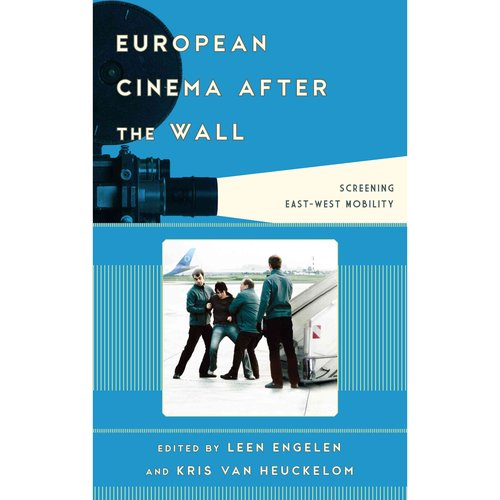
Holiday reading: European Cinema After the Wall: Screening East-West Mobility (Leen Engelen and Kris Van Heuckelom, eds. Lanham: Rowman and Littlefield, 2013).

My essay, “Riverboat Europe: Interim Occupancy and Dediasporization in Goran Rebić’s Donau, Duna, Dunaj, Dunav, Dunarea (2003)” is in this compilation. I received my copy just after Thanksgiving, and look forward to reading the essays by fellow contributors as soon as the late-semester grading crush is over.

An excerpt from my piece:

A film like The Danube highlights the difficulty of extricating oneself completely from one’s national identity, and indeed points to ways in which holding on to national identity in order to leverage it as a gift or peace offering may be advantageous. Nikola fretfully offers to renounce his obsolete Yugoslavian citizenship to atone for his decade-long absence; Mathilda proposes using her citizenship to fulfill Mircea’s dream of immigration. Most importantly, however, The Danube is one of a number of films that demand a nuanced discussion of hybridity and diasporic identity that [Thomas Elsaesser’s] paradigm of double occupancy can’t provide. Elsaesser’s reflections on double occupation as a state addressed by European policy and European cultural products like film and television take the form of an abstract overview. Rebić’s characters might well describe their lives as doubly occupied by their present and their past, their nationality and their post-nationality, but the “other kinds of belonging, relating and being” (Elsaesser 205: 109) in which they are shown to take part require a different adjective. I propose “interim occupancy” as a term to outline the domains through which double occupieds are often in transit, residing impermanently in widely varying degrees of comfort, health and peace…


An island of language in an ocean of traces

Just finished Gayatri Spivak’s, An Aesthetic Education in the Era of Globalization (Cambridge: Harvard University Press, 2012).

Of the essays in this compilation, I found particular inspiration in “Sign and Trace,” written on the artwork of Anish Kapoor.

MY RED HOMELAND, Anish Kapoor, 2003. Wax and oil-based paint, steel arm, motor. Installation view. Accessed at http://lipmag.com/arts/exhibition-review-anish-kapoor/

MY RED HOMELAND, Anish Kapoor, 2003. Wax and oil-based paint, steel arm, motor. Installation view. Accessed at http://lipmag.com/arts/exhibition-review-anish-kapoor/

Spivak writes:

Just after I had my first walk through Kapoor’s studio, I spoke to a group in Austria: “We will have to be able to think that for each one of us and groups of us, globalization is an island of languaging in a field of traces. Just descriptively, upstream from politics, globalization is an island of languaging in a field of traces.” 492

She goes on to explain that we shouldn’t think of the global in terms of exchange that “privileges host or target, ceaselessly and indefinitely” (493). Instead, globalization means that we humans are in the peculiar position of being bounded or restricted by the nature of our national, social, racial and gendered circumstances, yet we live constantly alert to the radically different circumstances of others beyond our boundaries that we can’t quite decipher, that we don’t totally understand. Spivak repeats,

…globalization makes us live on an island of language in an ocean of traces, with uncertain shores ever on the move. This “we” extends all the way from those who can view Anish Kapoor at Guggenheims to the unending circulation of labor export from the global South. Each member or collectivity belonging to this tremendously large group understands one or a few languages and is sure that the other organizations of noises are meaning-full but not for him or her. Language and trace are here in a gender-differentiated taxonomy rather than merely opposed. 493

For those of us working in visual studies, the end of this essay is especially thought-provoking. Spivak confirms that images are “islands of meaning” in a different way than language is. Images exist in an ocean of traces, sure, but they are traces, too, and in a less definitive way than words can be. Like all of the sand suspended in each watery wave, images make us aware that the distinction between our island of sense and the global around us isn’t as drastic or clear cut as we might think.

24/7

Jonathan Crary’s 24/7 is a cranky, smart, quick and cuttingly-relevant read.

Some passages I found elegant, thought-provoking, and unsettling:

Behind the vacuity of the catchphrase, 24/7 is a static redundancy that disavows its relation to the rythmic and periodic textures of human life. It connotes an arbitrary, uninflected schema of a week, extracted from any unfolding of variegated or cumulative experience[…]A 24/7 environment has the semblance of a social world, but it is actually a non-social model of machinic performance and a suspension of living that does not disclose the human cost required to sustain its effectiveness. It must be distinguished from what Lukács and others in the early twentieth century identified as the empty, homogenous time of modernity, the metric or calendar time of nations, of finance or industry, from which individual hopes or projects were excluded. What is new is the sweeping abandonment of the pretense that time is coupled to any long-term undertakings, even to fantasies of “progress” or development. An illuminated 24/7 world without shadows is the final capitalist mirage of post-history, of an exorcisim of hte otherness that is the motor of historical change. (9)

If 24/7 can be provisionally conceptualized as an order-word, its force is not as a demand for actual compliance or conformity to its apodictic format. Rather, the effectiveness of 24/7 lies in the incompatibility it lays bare, in the discrpancy between a human life-world and the evocation of a switched-on universe for which no off switch exists. Of course, no individual can ever be shopping, gaming, working, blogging, downloading or texting 24/7. However, since no moment, place or situation now exists in which one can not shop, consume, or exploit networked resources, there is a relentless incursion of the non-time of 24/7 into every aspect of social or personal life. There are, for example, almost no circumstances now that can not be recorded or archived as digital imagery or information. The promotion and adoption of wireless technologies, and their annihilation of the singularity of place and event, is simply an after-effect of new institutional requirements. In its despoliation of the rich textures and indeterminations of human time, 24/7 simultaneously incites an unsustainable and self-liquidating identification with its fantasmatic requirements; it solicits an open-ended but always unfinished investment in the many products for facilitating this identification. (30-31)

The narrow and monopolized set of electronic products and services available at any given moment masquerades as the all-enveloping phenomenon of “technology.” Even a partial refusal of the intensively marketed offerings of multinational corporations is construed as opposition to technology itself. (49)

Three thoughts on visual culture studies

This summer I had a discussion with another scholar over whether our work should be considered “visual culture” or “visual studies.” She tilted her head. “Visual culture has these connotations of material culture, of cultural studies, of nineteenth-century studies,” she explained. “Not art historical or film theoretical enough. I usually say ‘visual studies.'”

I nodded. I understood. Yet, I explained, I consider a rigorous focus on spectatorial environment, historical conditions of reception and/or the materiality of projection methods to be fundamental to my study of the visual. The overarching cultural connection is very important to me.

With Visual Culture Studies (London: Sage, 2008) Marquard Smith has fleshed out an interdisciplinary term that suggests the marriage of perception and its position amidst the social. Here are three perspectives on visual culture studies from the interviews he conducted that I find particularly thought-provoking, whether or not I entirely agree or disagree with them.

W.J.T. Mitchell:

I suspect that the most interesting new questions for visual studies, then, will be located at the frontiers of visuality, the places where seeing approaches a limit and is faced with its own negation, or with some other perceptual modality or medium. That is probably why, in my own ‘general’ teaching, I have shifted from visual culture to media studies. It’s not because I have given up on visual studies, but because the problem of mediation opens the visual onto different phenomenological frontiers (stillness and motion; audition, tactility, and embodiment) as well as technologies and regimes of the visible. This leads me to ask what the digitalization of the visible field means, and to press for answers that would take us beyond the received ideas, e.g. the ‘loss of the real’ posited by so many theorists[…]The current revival of Guy Debord’s concept of the ‘spectacle’ as a tool for diagnosing the war on terror (see Afflicted Powers: Capital and Spectacle in a New Age of War, the Retort collective) strikes me as deeply flawed in its hostility to technical considerations, and its recourse to iconoclastic remedies for political maladies. If visual studies is going to engage capitalism, politics and war through the medium of spectacle, it is going to require analysis and historical investigation of the spectacular concept itself (36).

the wonderful Vivian Sobchack:

For the most part, I think that what goes by the name of ‘visual culture’ is really ‘visible culture.’ That what gets talked about is not ‘visuality’ but ‘visibility.’ Similarly, instead of talking about embodiment–what it is to live a body, what it is to live acts of seeing not merely with one’s eyes (as if that were possible)–most scholars talk about ‘the body’–positing it as merely a thing, or as a visible object belonging to someone else. This seems to me a continuation of the objectivist project–despite the fat that people writing about ‘visuality’ and ‘the body’ are critiquing that project.

[…]

I think the distinctions between visible culture and visual culture are terribly important ones. Although it’s changing, the tendency still is to only talk about the side of vision that is about the visible, not about the visual. But you need both sides to achieve vision. Thinking about visuality links vision to the body and our other senses which are not, to use a phrase, ‘asleep on the job,’ but active in giving the things we see a visible thickness and dimension (124).

Best and last, Martin Jay:

In the critique of the reifying power of the gaze, most extensively explored in Sartre’s Being and Nothingness, there was already a powerful ethical moment, which was given added impetus when feminists like Luce Irigaray and Laura Mulvey stressed its gendered character. The Jewish emphasis on hearing as opposed to the Greek stress on sight, which Levinas tied to the relative importance respectively of the ethical and the ontological in each tradition, increased still further the ethical stakes in discussions of visual culture.

Perhaps the real task these days is not so much to rehearse these now familiar connections, but rather to probe the ways in which the sense of ‘looking after’ someone is just as much a possibility as ‘looking at’ them in le regard, and ‘watching out for someone’ is an ethical alternative to controlling surveillance (184).

Handbook of Inner Culture for External Barbarians

A short but sharply thought-provoking bit of Nietzsche, inspired by an excellent classroom discussion about On the Advantage and Disadvantage of History for Life (1874) today:

That well known little people of a not too distant past, I mean just the Greeks, had stubbornly preserved its unhistorical sense in the period of its greatest strength; were a contemporary man forced by magic spells to return to that world he would presumably find the Greeks very “uneducated,” which would, of course, disclose the meticulously disguised secret of modern culture to public laughter: for from ourselves we moderns have nothing at all; only by filling and overfilling ourselves with alien ages, customs, arts, philosophies, religions and knowledge do we become something worthy of notice, namely walking encyclopedias, as which an ancient Hellene, who had been thrown into our age, might perhaps address us. The whole value of encyclopedias, however, is found only in what is written in them, the content, not in what is written on them or in what is cover and what is shell; and so the whole of modern culture is essentially internal: on the outside the bookbinder has printed something like “Handbook of Inner Culture for External Barbarians.”

Views from above in A Sixth Part of the World and The Eleventh Year

I’ve recently submitted an article examining the aerial view as a visual modality. Two more film fragments by Vertov that have inspired me to think further on the subject:

http://www.youtube.com/watch?v=1Vp_uzUlIn4&feature=youtu.be

The opening of A Sixth Part of the World (1926), in which Vertov juxtaposes omniscient vision from above, the slicing legs of foxtrotters, the powerful magnet of a construction crane and the small mole on the back of a bourgeois neck.

Another aerial view from the ending of The Eleventh Year (1928), where the technological advancements of Soviet aviation link Russia to its Chinese comrades via sight and flight.

This last sequence, with its views from below, from above, and from beside a soaring plane reminds me of Paula Amad’s excellent essay published last year in History of Photography, “From God’s Eye to Camera Eye: Aerial Photography’s Post-humanist and Neo-humanist Visions of the World.” Amad thoughtfully takes on the dialectic between abstracted knowledge in views from above and embodied knowledge in views from below, arguing for a more fluid, less dogmatic understanding of our encounters with this practice of looking.

Zygmunt Bauman on the Other and representation

Mystery–noted Max Frisch–(and the Other is a mystery), is an exciting puzzle, but one tends to get tired of that excitement. ‘And so one creates for oneself an image. This is a loveless act, the betrayal.’ Creating an image of the Other leads to the substitution of the image for the Other; the Other is now fixed–soothingly and comfortingly. There is nothing to be excited about anymore. I know what the Other needs, I know where my responsibility starts and ends[…]But as György Lukás observed, ‘everything one person may know about another is only expectation, only potentiality, only wish or fear, acquiring reality only as a result of what happens later, and this reality, too, dissolves straightaway into potentialities.’ Only death, with its finality and irreversibility, puts an end to the musical-chairs game of the real and the potential–it once and for all closes the embrace of togetherness which was before invitingly open and tempted the lonely self. ‘Creating an image’ is the dress rehearsal of that death. But creating an image is the inner urge, the constant temptation, the must of all affection…

From Zygmunt Bauman’s “Forms of Togetherness,” in Life in Fragments: Essays in Postmodern Morality. (Blackwell: Cambridge, 1995) 44-71.

Writing, writing, writing

Der arme Poet / The Poor Poet, Carl Spitzweg, 1839, oil on canvas, 36.2 × 44.6 cm.

For a long while I had a link on my “projects” page to this painting, which I love with all the force of a million starving artist cliches. I thought I’d post it here as a fond and gently satirical testament to work of the mind.

A couple of interesting facts I learned while browsing the German Wikipedia entry for this painting:

-After the Mona Lisa, this is the painting that Germans most love in the world (according to an unidentified poll).

-Many have wondered what sort of a gesture this poor poet is making with his right hand. Some think he is scanning verse. Others believe he has plucked and is squishing a flea from his bedding. All poor poets know that one does not discount the other.

Mathias Etenhueber had the dubious privilege of serving as the model for this poor poet picture.

-And finally, my favorite: There are two almost identical versions of this painting. One is in the Neue Pinakotek in Munich, and the other was in the Nationalgalerie in Berlin. Until it was stolen by Ulay in 1976 as part of a performance piece (!), then stolen again in 1989 by true art thieves and never located. In art, there is a criminal touch.