Unknown's avatar

About Jennifer Stob

art and film historian

Sight and Site I: Oblivion, apocalypse, film and media

This is the first in a series of reflections I’ll post that are related to the undergraduate capstone seminar “Sight and Site in Film and Media” that I am teaching this semester.

Transatlantic travel is always my chance to catch up on all of the films with talking animals, explosions and successful romantic pairings that I tend to miss out on during the school year.

This December in the air, I treated myself to a marathon viewing of interplanetary disaster:  Pacific Rim (Guillermo del Toro, 2013), World War Z (Marc Forster 2013) and Prometheus (Ridley Scott, 2012). The plane binge was in large part inspired by Ed Halter’s smart and troubling op-ed in December’s Artforum about the recent bumper crop of catastrophe movies. Ed writes,

…[T]he boom in apocalyptic entertainment suggests that we now have no viable concept of our collective future other than collapse, be it ecological, economic, or both. Two of the most pointed articulations of this sensibility were found in Roy Scranton’s philosophical editorial in the New York Times“Learning How to Die in the Anthropocene,” and science-fiction authorKim Stanley Robinson’s sobering keynote address for the future-conscious series Speculations at MoMA PS1’s summer exhibition Expo 1.

To these, I’ll add a couple more that Ed’s piece brought to mind:

Fredric Jameson’s Geopolitical Aesthetic: Cinema and Space in the World System (Indiana Press, 1992).  If, as Jameson claims, late 20th century conspiracy films are “allegories of each other, and of the impossible representation of the social totality itself,” (5), we might conclude from Ed’s observations that 21st century disaster films represent the total impossibility of the social.

– Mark Fisher’s ultra-noir “Its Easier to Imagine the End of the World than the End of Capitalism,” The Visual Culture Reader, Nicholas Mirzoeff, ed. (New York: Routledge, 2013), 307-312. In it, Fisher also points to turn-of-the-21st century films that disseminate “‘capitalist realism,’ the widespread sense that not only is capitalism the only viable political and economic system, but also that it is now impossible even to imagine a coherent alternative to it.” (307)

– Elizabeth Kolbert’s excellent two-part series in the New Yorker, “Annals of Extinction: The Lost World.” Kolbert ends her reportage with the bittersweet, Proustian pleasure of scattering fossils from the Palaeozoic era or earlier amongst fast food debris of the Anthropocene.

Ed’s piece in Artforum concludes,

In so many of this year’s end-time spectaculars, the militarization of society is seen as the only probable outcome in the face of disaster, whether it’s Cruise’s maverick flyboy in Oblivion, the global police state of ElysiumAfter Earth’s father-son commander-cadet team, Pacific Rim’s mind-melded machine-warriors, the never-ending conflicts of World War Z, or the overachieving child soldiers of Ender’s Game and Hunger Games. This shared proposal should be as disturbing to us as any overwrought images of cataclysm.

I’m planning to make this proposal of militarization disturbing to my students with some of the films in the spring senior seminar I’m teaching: Sight and Site in Film and Media. (Disturbing…but rewarding!)

The class will watch a range of films–experimental and commercial, short and long, documentary and fiction–from 1926 to 2013. We’ll be thinking together about two different aspects of mapping and place: 1.) the different ways that diagrammatic or illustrative site is employed in film narrative and 2.) the different ways that digital media narrativizes our sight of actual places and maps. Over the next months I’ll probably write a number of posts inspired by the class.

I’ll teach Oblivion (Joseph Kosinski, 2013) together with La Jetée (Chris Marker, 1962), selections from Marc Augé’s Oblivion, the Mark Fisher excerpt mentioned above, and Mark Andrejevic’s “The Work of Being Watched: Interactive Media and the Exploitation of Self-Disclosure.” I want students to consider how Oblivion and La Jetée are both social panegyrics, but I also want them to use the screening and texts together as an unexpected springboard for considering their everyday experiences with surveillance, interactive screens, and memory.

In lieu of an ending: an “inspiration board” for Sight and Site in Film and Media that I sent to my class to whet their appetite (click to enlarge):

FMST 400

(The myth of) the science of social space

I’ve just published a review of Jeanne Haffner’s lucid and interesting The View from Above: The Science of Social Space (Cambridge: MIT Press, 2013). It’s in the current issue of French Studies, accessible here.

An excerpt:

The myth of social space was invoked in France by Marxists as well as by conservatives, city commissioners, and professors. Utopian in the equilibrium it implied, ‘social space’ referred to ‘space abstracted beyond the chaos of the ground but not divorced from it; not solely geographical or social, it was […] a spatialization of complex social and economic relationships within a particular urban environment’ (p. 82).

The View From Above establishes extremely valuable connections between the high modernist use of aerial photography detailed in the research of scholars such as Paula Amad, and the late modernist disillusionment with aerial photography exemplified by Guy Debord’s texts and films during and after his participation in the Situationist International. It represents a continued invitation to contemplate our view of the city and our right to it.

For Auld Lang Syne

A few nights ago I watched Eberhard Fechner’s sublime and shattering Nachrede auf Klara Heydebreck (60 minutes, 1969).

I first heard of the film in the context of its monteuse, Brigitte Kirsche. She was one of the interviewees on the double DVD that the Deutsche Filmmuseum has released on the art of editing, Schnitte in Raum und Zeit (2006). Her insights on weaving together still photograph documentation and diverse sources of interview testimony were profound. It seems her long film partnership with Fechner was truly rich.

Fechner’s 1969 TV-commissioned documentary investigates the life of a 72-year-old, single German woman who was born just before the 20th century and took her own life in 1968.

The film sets out to answer the question, “Who was Klara Heydebreck?”, collecting and displaying for us her personal belongings, official records, correspondance and snapshots. These materials are the base support for the memories of the interviewees who knew Heydebreck: her surviving family, from whom she had become estranged, the policemen assigned to her suicide case, the neighbors in her apartment building whom she anxiously avoided, and her closest friend from childhood.

Interspersed with these interviews are the unsentimental and studied findings of Fechner himself. In voiceover, he attempts to reckon together her passion for the arts, her failure to thrive after the death of her mother, her unknown suffering in the aftermath of World War Two and her pauperism, reclusivity and loneliness after middle age.

What traces do we leave on life? Can others see and comprehend the traces it leaves on us? These are the more fundamental questions that Nachrede auf Klara Heydebreck asks without answering. The film leaves us with a resonant sense of how expansive and yet how negligible every human soul can be–or more accurately, how expansively or negligibly it can be treated by its fellow human souls and the socio-economic systems in which all human souls exist.

This is one of the finest, most moving and most sparing documentaries I have ever seen; it is a terrible shame that it isn’t available with foreign language subtitles. Translator friends: a project for the new year? We’ll take a cup of kindness yet… 

Subversion des images

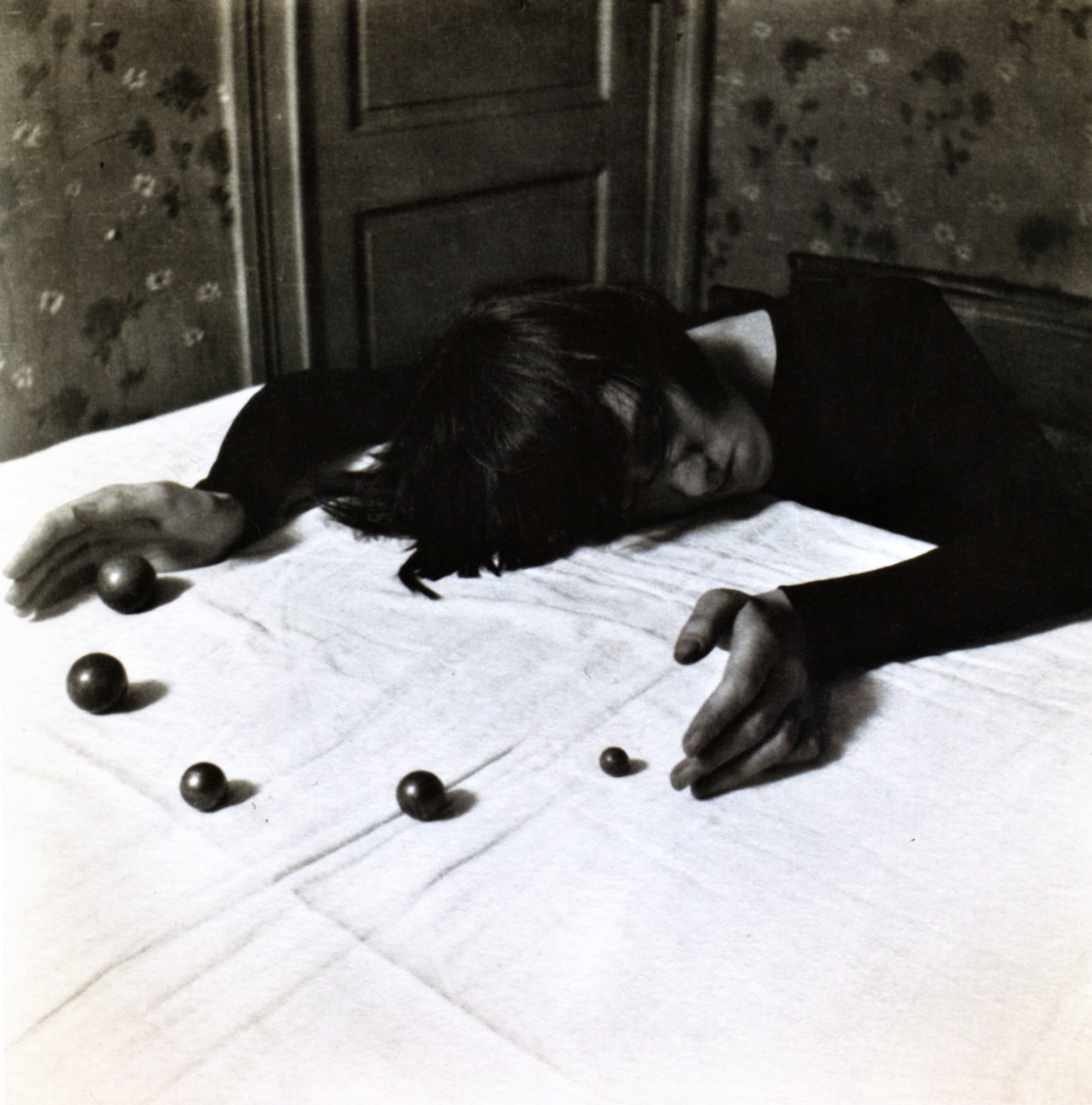
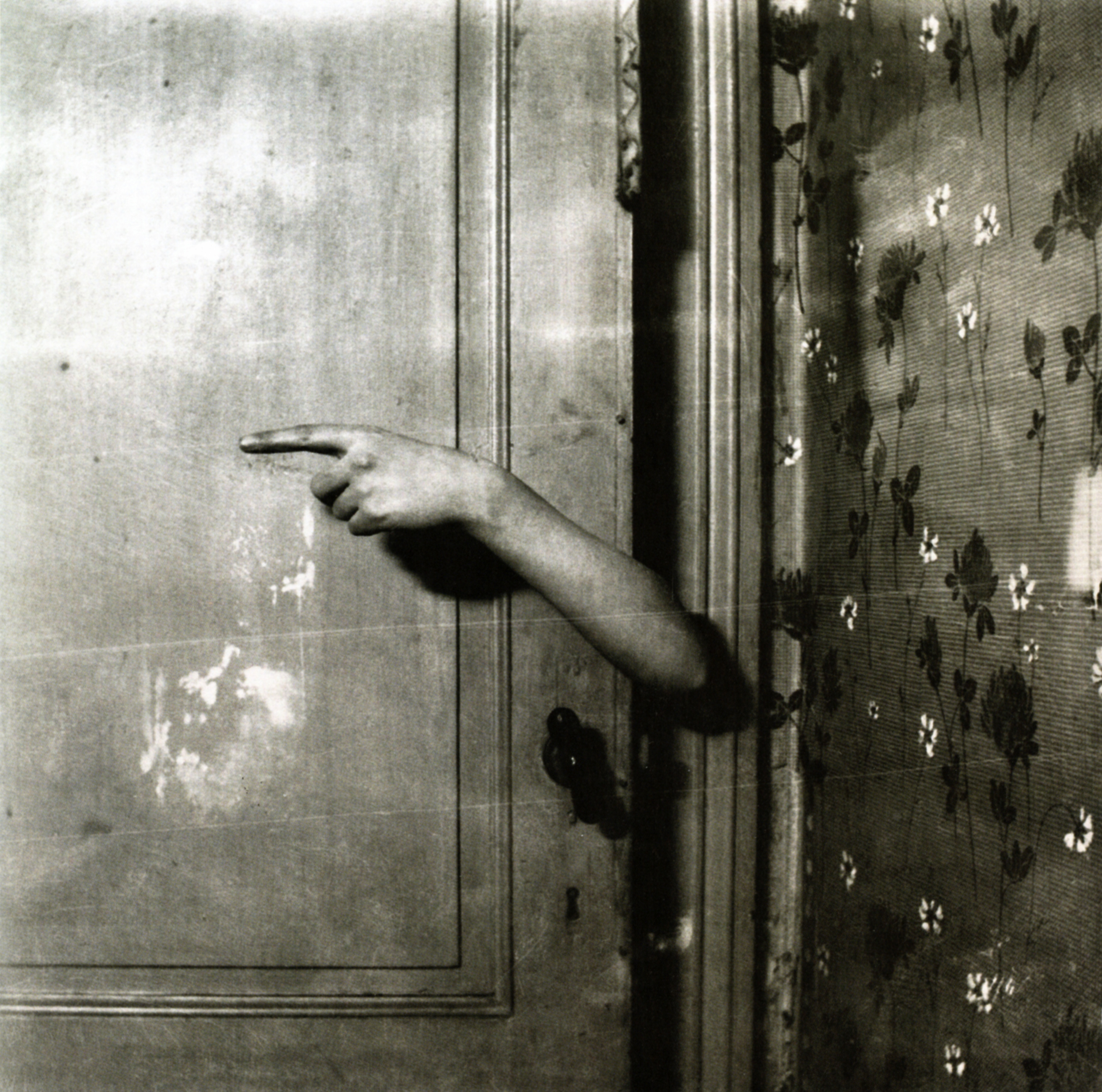
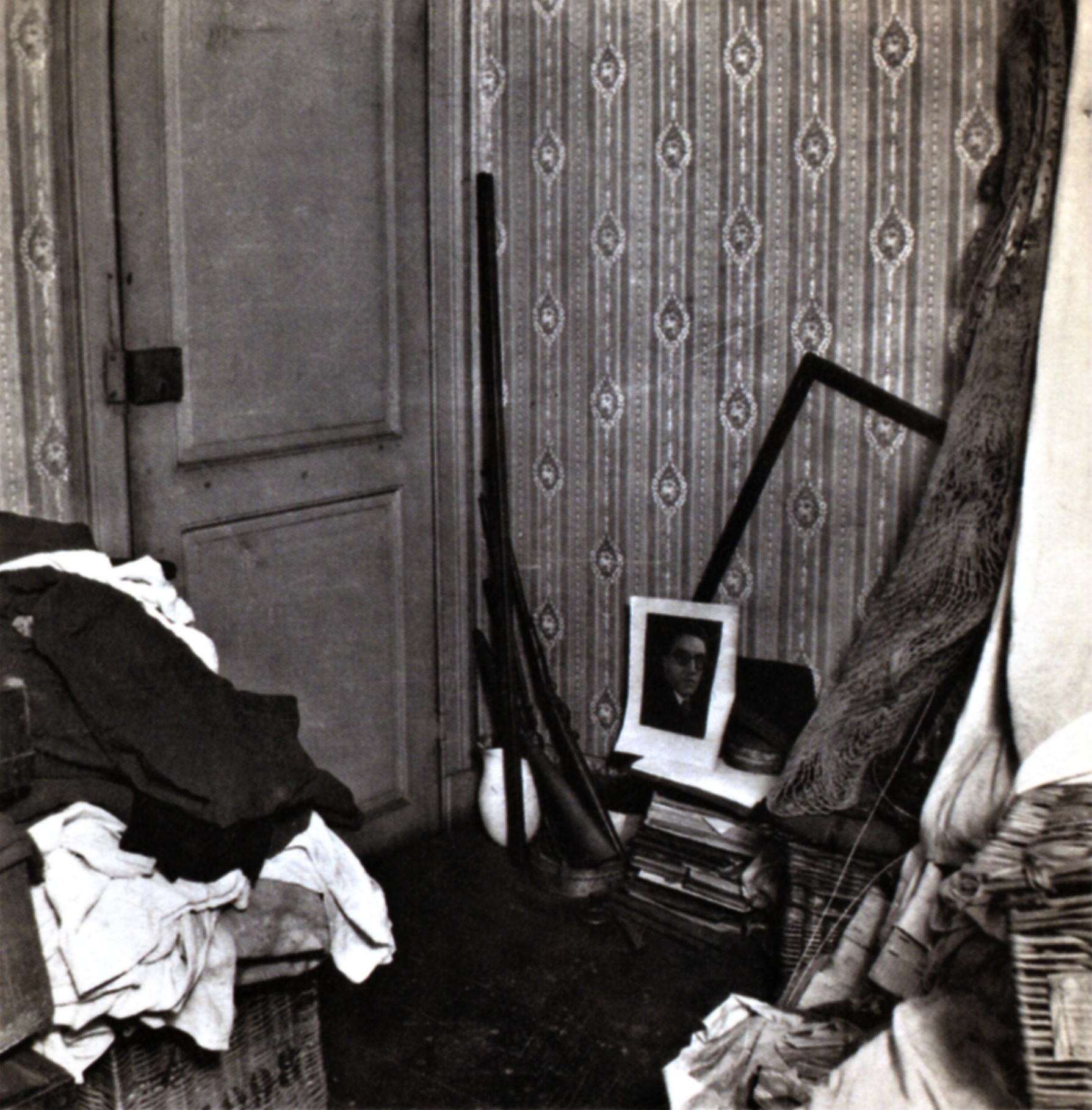
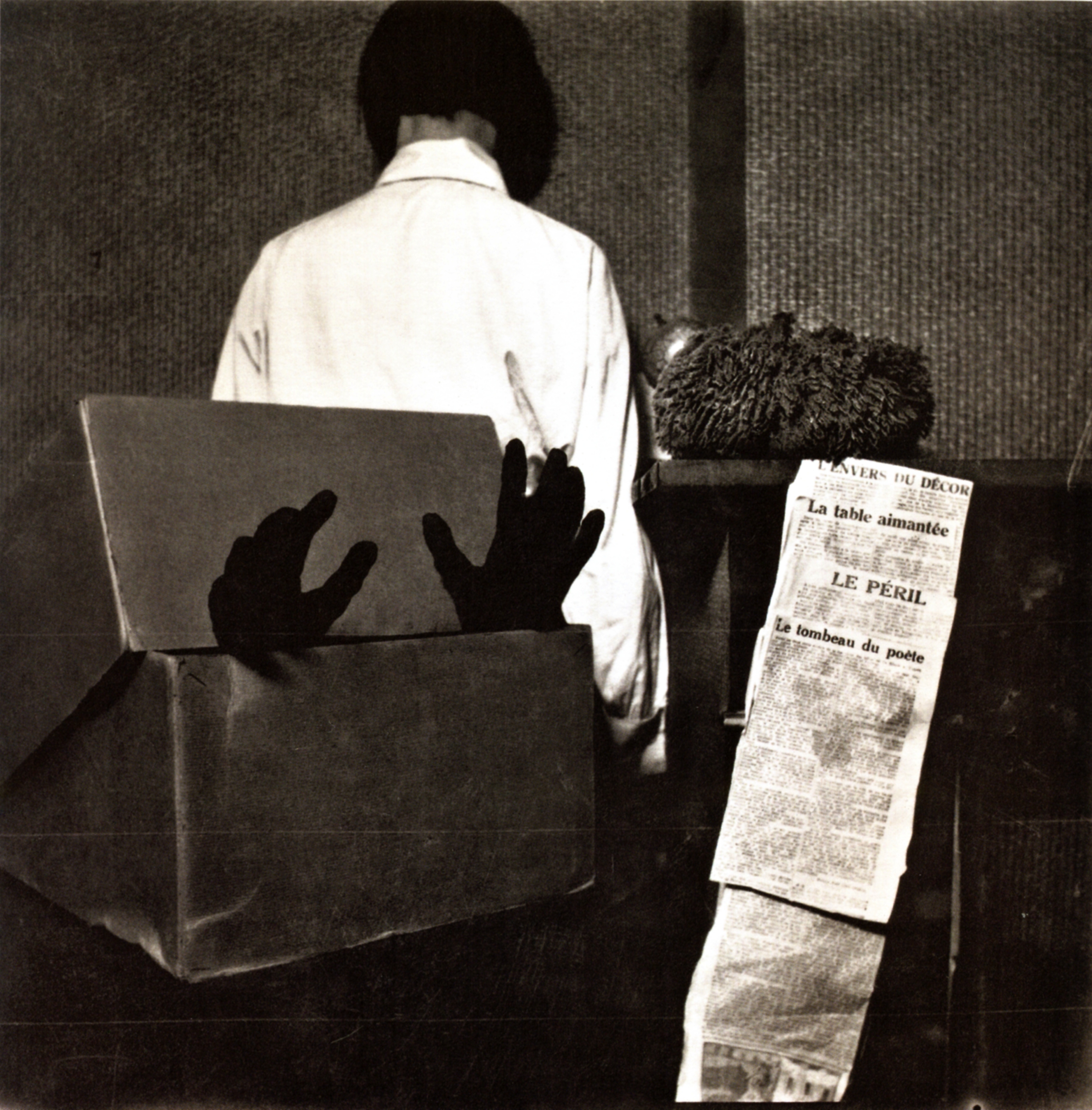
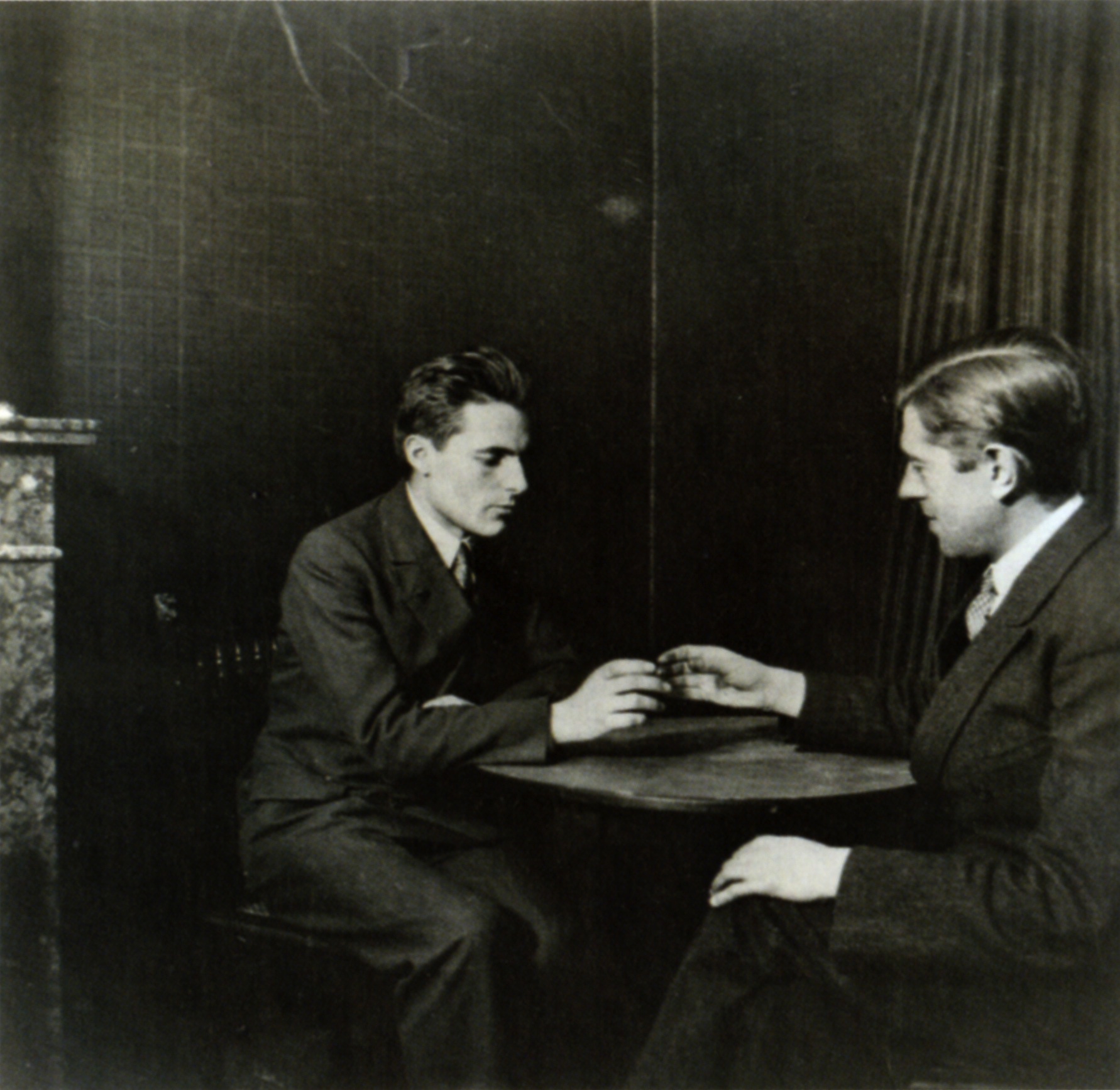
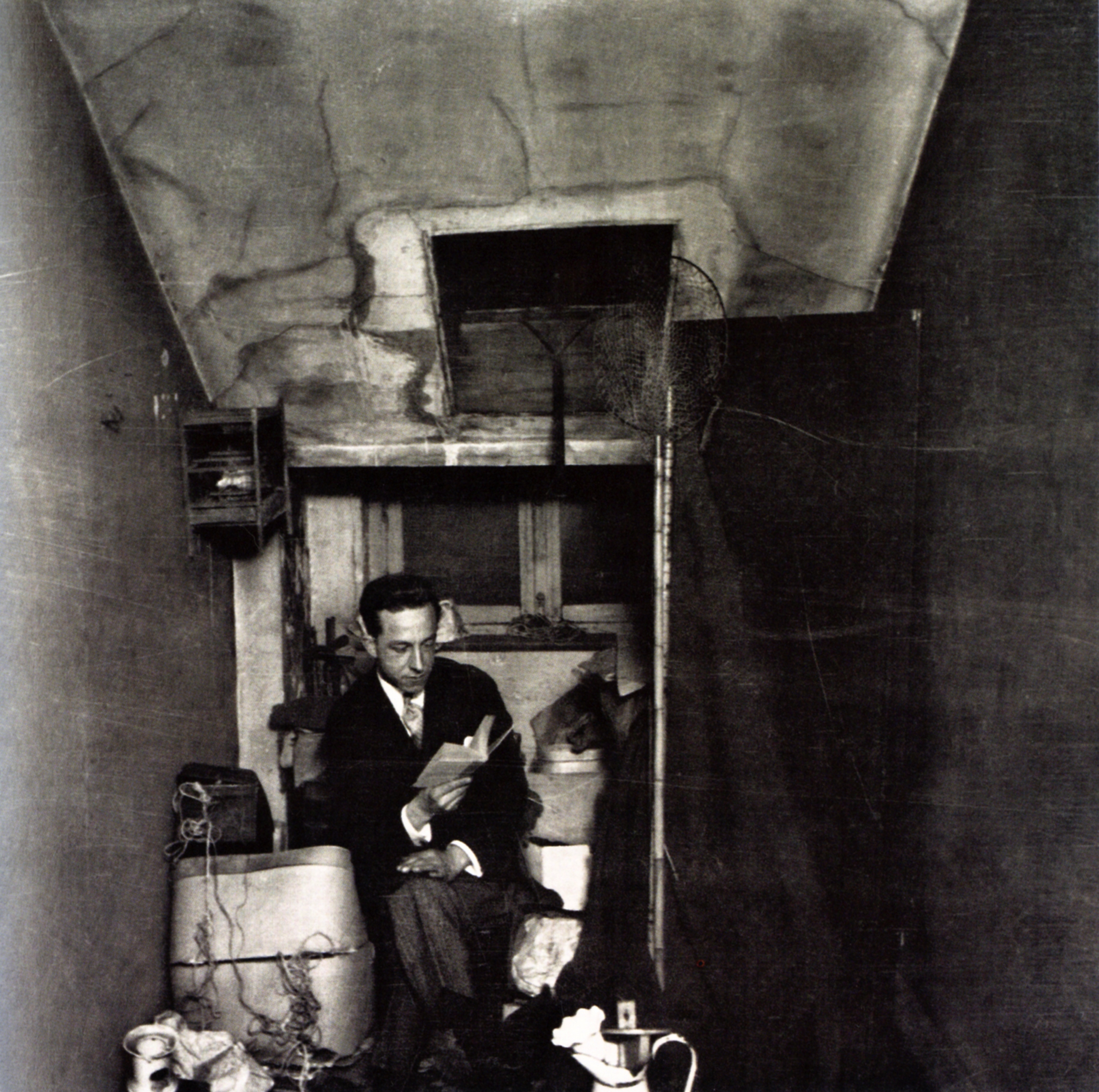
Here below: the photographs that Paul Nougé took between 1929 and 1930 that were published as a series by Marcel Mariën in 1968. (Click to enlarge.)

These are from a little treasure file of scans I’ve made that I keep for future research inspiration. For some reason I only have 17 images of a supposed set of 19. I’ll have to figure out which ones I missed. “Subversion of images” indeed…!

La jongleuse

La jongleuse

Les profondeurs du sommeil

Les profondeurs du sommeil

La naissance de l'objet

La naissance de l’objet

La vengeance

La vengeance

Femme dans l'escalier

Femme dans l’escalier

...les oiseaux vous poursuivent

…les oiseaux vous poursuivent

Le bras revelateur

Le bras revelateur

Le grenier

Le grenier

Les vendanges du sommeil

Les vendanges du sommeil

Manteau suspendu dans le vide

Manteau suspendu dans le vide

Femme effrayée par une ficelle

Femme effrayée par une ficelle

Table aimantée, tombeau du poete

Table aimantée, tombeau du poete

Cils coupés

Cils coupés

Mur murmure

Mur murmure

Les buveurs

Les buveurs

Linges et cloche

Linges et cloche

Le lecteur

Le lecteur

The set is conventionally interpreted in terms of its photographic self-reflexivity. Frédéric Thomas suggests that what Nougé subverts is documentation, the representative real.

It’s true that the zaniness of these photos lies in missing or irrational objects that are literally being “signed” or “indicated” to viewers. In this sense, the indexicality of analogue photography is repeatedly exposed as all indexing, no “thing itself.”

However, I like the idea that Subversion des images is less medium-specific than it may first appear.

Mariën suggested in 1968 that the series was the starting point for Les images défendues (1943), Nougé’s theory of René Magritte’s paintings. In this sense, Nougé’s interest in subverting images overrides any category of image in particular. He stresses process, instead. His statements that accompany this photographic series explain his intent to make spectators “play at perverting objects” (Nougé 17). In Subversion of Images, making and looking are part of the same subversive “methodical exploration,” which consists of:

Choosing an action performed through an object or on an object and modifying this object while perfectly maintaining the gesture or attitude of the chosen action (Nougé 1968: 19-20)

I find this to be a very rich and very intermedial artistic project. Subversion of Images is like a wrinkle in art historical time, an artwork that arrives at Surrealism by way of Fluxus.

Further reading on Subversion des Images:

Ana Gonzalez Salvador, “Nougé et l’action photographié: la pensée faite corps,” Francofonìa 13 2004, 53-70.

Frédéric Thomas, “Towards a Minor Surrealism: Paul Nougé and The Subversion of Images” Minor Photography: Connecting Deleuze and Guattari to Photography Theory, ed. Mieke Bleyen. Leuven: Universitaire Pers Leuven, 2012, 125-144.

Riverboat Europe

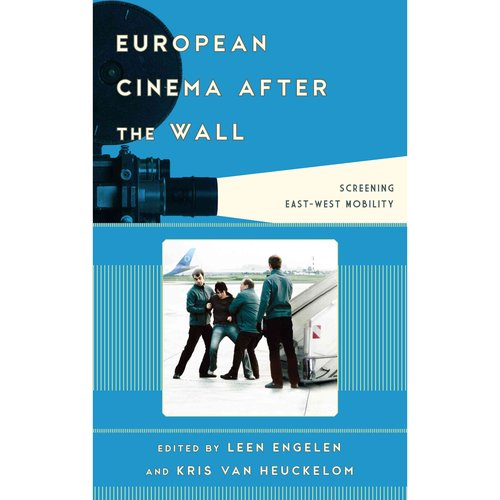
European Cinema

Holiday reading: European Cinema After the Wall: Screening East-West Mobility (Leen Engelen and Kris Van Heuckelom, eds. Lanham: Rowman and Littlefield, 2013).

My essay, “Riverboat Europe: Interim Occupancy and Dediasporization in Goran Rebić’s Donau, Duna, Dunaj, Dunav, Dunarea (2003)” is in this compilation. I received my copy just after Thanksgiving, and look forward to reading the essays by fellow contributors as soon as the late-semester grading crush is over.

An excerpt from my piece:

A film like The Danube highlights the difficulty of extricating oneself completely from one’s national identity, and indeed points to ways in which holding on to national identity in order to leverage it as a gift or peace offering may be advantageous. Nikola fretfully offers to renounce his obsolete Yugoslavian citizenship to atone for his decade-long absence; Mathilda proposes using her citizenship to fulfill Mircea’s dream of immigration. Most importantly, however, The Danube is one of a number of films that demand a nuanced discussion of hybridity and diasporic identity that [Thomas Elsaesser’s] paradigm of double occupancy can’t provide. Elsaesser’s reflections on double occupation as a state addressed by European policy and European cultural products like film and television take the form of an abstract overview. Rebić’s characters might well describe their lives as doubly occupied by their present and their past, their nationality and their post-nationality, but the “other kinds of belonging, relating and being” (Elsaesser 205: 109) in which they are shown to take part require a different adjective. I propose “interim occupancy” as a term to outline the domains through which double occupieds are often in transit, residing impermanently in widely varying degrees of comfort, health and peace…


Aftertalking at Bryn Mawr: May ’68 in commercial film

Participating in Bryn Mawr’s Visual Culture Colloquium was a true pleasure!

I appreciated the stimulating feedback on my work in progress and reconnecting with Rebecca DeRoo, a fellow hybrid art historian/film theorist/Francophone.

Stob

At lunch afterward, a fun and very thought-provoking exchange with Homay King, Katherine Rochester and Johanna Gosse prompted me to record these thoughts on Paris’s May 1968 and commercial fiction film:

For Anglophone audiences, Bernardo Bertolucci’s The Dreamers (2003) is more or less the go-to ’68er historical adaptation. The Dreamers is interesting in passages, but generally a quite empty viewing experience–neither historically nor politically nor emotionally insightful.

THE DREAMERS, Bernardo Bertolucci, 2003

THE DREAMERS, Bernardo Bertolucci, 2003

Unfortunately, most of Olivier Assayas’ Après mai (2012) doesn’t succeed in distancing itself from this kind of momentarily interesting, prettily erotic, socio-politically empty narrative.

I believe the weaknesses in both films lies in their misguided attempt to allegorize May as an individual love story–one that purports to be a lover’s triangle, but in reality is just two sets of couples that happen to have one person in common.

If Paris’s May and its paradoxes are to be accessed, the way to do so is in exploring love, sexual awakening or elective affinities more generally in juxtaposition with the idea of collectivity or collaborative projects. This is why the most arresting and contemplative moments of Après mai (disappointingly titled Something in the Air in English) come at the very end, as Gilles takes his first steps into film production and, ironically enough, also cracks open the Situationist International’s ode to collective dissolution La véritable scission dans l’Internationale (1972) whilst riding in the RER.

SOMETHING IN THE AIR, Olivier Assayas, 2012. Image accessed at http://media.tumblr.com/tumblr_mej0s8YuKd1r988uj.jpg

One pick for teaching France’s May ’68 would be Louis Malle’s Milou en mai / May Fools (1990), a disturbing homage to Marx’s idea that history repeats itself as farce (farce and cuckoldry, it seems).

MILOU EN MAI (Louis Malle, 1990). Image accessed at http://kemes.files.wordpress.com/2012/04/milou-en-mai-1990.jpg

Two other films released much closer to the bitter disbelief and disillusionment following May’s moveable feast would be Jean Eustache’s La Maman et la putain / The Mother and the Whore (1973) wherein the love triangle turns out to be a kind of triple-edged weapon, injuring everyone in turn…

…and Jacques Rivette’s epic Out 1 (1971), in which the social revolt is an unacknowledged MacGuffin that motivates the relationships of all characters to one another.

OUT 1 (Jacques Rivette, 1971). Image accessed at http://imageshack.us/a/img843/7082/out1ep12.png


A final film we spoke of that afternoon: Sally Potter’s excellent Ginger and Rosa (2012). Although it’s not a film about France’s ’68 per se, the themes it treats are extremely resonant and provocative when considered in that context. I disliked the fact that the film transposes the backlash against consumer society into family trauma, but I thought that move was highly creative and very worthy of scholarly close looking.

GINGER AND ROSA (Sally Potter, 2012). Image accessed at https://jenniferstob.com/wp-content/uploads/2013/11/8715a-ginger-and-rosa-still.jpg


A second post soon that gathers together some excellent French shorts on the subject of May ’68.


Black Moon

If only Louis Malle’s 1975 folly, Black Moon were a short film! The first twenty or thirty minutes are frightening and sublime. A young woman tears through wild and beautiful countryside in the attempt to escape a strange civil war between men and women. I began watching, and expected something like the political allegory of Peter Watkin’s Punishment Park (1971) to develop.

However, Malle is uninterested in the problems and the possibilities of something like feminist armed resistance. Like the bedridden old woman (Thérèse Giehse) later in the film who radios nonsense to some unseen master narrator, Malle relays the tone, suggestion and gesture of sexual identity instead of any cogent expression of it or any attempt at agency through it. Ultimately the film is a retrospective, Bathusian muddle, breathtakingly filmed by Ingmar Bergman’s cinematographer, Sven Nykvist. I recommend the extraordinary trailer.

Seduction by ellipsis

Claude Sautet’s Classe Tous Risques is an odd little growing pain of a film. It is fascinating to watch the way that the cinematography and story negotiate (sometimes clumsily) between the stolid camera of 1950s French cinéma de qualité and the energetic errors and innovations of the New Wave.

Lino Ventura as an anguished head gangster cum family man and his tragic end is one half of this schizophrenic story–the poetic realism half, gloomy and moralistic and softly beautiful. The other half is Jean-Paul Belmondo as a free agent thief, guileless and unperturbed, with an excellent left uppercut to keep him out of trouble.

The film was in theaters at the same time as Breathless, and was of course immediately drowned out by the attention given to Godard’s feature length debut. I love the idea of doppelgänger Belmondos on the screens of Parisian movie houses–one telling his audience to go screw themselves if they don’t like the countryside, one trying out a heavy-handed pick up line only to shyly add, “…that is, if you’re interested.”

What unites the films is the way that elliptical editing becomes synonymous for a postwar social informality, a social intimacy, a social shorthand. Sequences from Classe Tous Risques in conjunction with one from Breathless will now become my go-to example for the filmic device and its New Wave before, in transition and after.

An island of language in an ocean of traces

Just finished Gayatri Spivak’s, An Aesthetic Education in the Era of Globalization (Cambridge: Harvard University Press, 2012).

Of the essays in this compilation, I found particular inspiration in “Sign and Trace,” written on the artwork of Anish Kapoor.

MY RED HOMELAND, Anish Kapoor, 2003. Wax and oil-based paint, steel arm, motor. Installation view. Accessed at http://lipmag.com/arts/exhibition-review-anish-kapoor/

MY RED HOMELAND, Anish Kapoor, 2003. Wax and oil-based paint, steel arm, motor. Installation view. Accessed at http://lipmag.com/arts/exhibition-review-anish-kapoor/

Spivak writes:

Just after I had my first walk through Kapoor’s studio, I spoke to a group in Austria: “We will have to be able to think that for each one of us and groups of us, globalization is an island of languaging in a field of traces. Just descriptively, upstream from politics, globalization is an island of languaging in a field of traces.” 492

She goes on to explain that we shouldn’t think of the global in terms of exchange that “privileges host or target, ceaselessly and indefinitely” (493). Instead, globalization means that we humans are in the peculiar position of being bounded or restricted by the nature of our national, social, racial and gendered circumstances, yet we live constantly alert to the radically different circumstances of others beyond our boundaries that we can’t quite decipher, that we don’t totally understand. Spivak repeats,

…globalization makes us live on an island of language in an ocean of traces, with uncertain shores ever on the move. This “we” extends all the way from those who can view Anish Kapoor at Guggenheims to the unending circulation of labor export from the global South. Each member or collectivity belonging to this tremendously large group understands one or a few languages and is sure that the other organizations of noises are meaning-full but not for him or her. Language and trace are here in a gender-differentiated taxonomy rather than merely opposed. 493

For those of us working in visual studies, the end of this essay is especially thought-provoking. Spivak confirms that images are “islands of meaning” in a different way than language is. Images exist in an ocean of traces, sure, but they are traces, too, and in a less definitive way than words can be. Like all of the sand suspended in each watery wave, images make us aware that the distinction between our island of sense and the global around us isn’t as drastic or clear cut as we might think.

Holes

I had the good fortune to see Eileen Myles and Thurston Moore perform together last week. It was a really great evening; its intensity surprised me.

I think many of us in the red-velveted auditorium felt a discomforting but not displeasing mise en abyme of nostalgia that night. (Paris’s Maison de la Poésie was the perfect place for it, with the Salle de Lautréamont right next door.)

The poetry they read and the music Moore performed were haunted by the specter of the lost-and-safe 1990s…

which was in turn haunted by the New York punk 1970s…

haunted by the Parisian decadents,

haunted by Sade and 18th century gothic terror…and that’s where I lose the trail of this dark streak. It was a glaringly Caucasian and Eurocentric day of the dead celebration.

Myles has moved much further beyond the mode of gleeful, negative immaturity than Moore in her creative work. She read from her forthcoming, unabashedly loopy dog memoir, which turns the dog she is fictionalizing into God. Her endearing and funny fusion of therapeutic lingo, rhythmic wordplay, and sensual description sounded very fresh to me.

Moore’s guitar work didn’t, but it did sound classic. I still found it quite moving:

The performance crystallized for me the highly problematic aspects of the Marxist-influenced, post-punk subjective paradigm Myles and Moore share. Yet it also helped me think about the ways this paradigm can still be useful and vital, once recast.

Punk never died, but was always part of a larger lineage of the undead that haunts dominant industrialized culture across the globe.

Here is Eileen Myles’ “Holes,” collected in Outlaw Bible of American Poetry, ed. Alan Kaufman. NY: Thunder’s Mouth Press, 1999.

Once when I passed East Fourth Street off First Avenue,
I think it was in early fall and I had a small hole
in the shoulder of my white shirt, and another on
the back–I looked just beautiful. There was a
whole moment in the 70s when it was beautiful
to have holes in your shirts and sweaters.
By now it was 1981, but I carried that 70s style
around like a torch. There was a whole way of
feeling about yourself that was more European
than American, unless it was American around
1910 when it was beautiful to be a strong
starving immigrant who believed so much
in herself and she was part of a movement
as big as history and it explained the
hole in her shirt. It’s the beginning
of summer tonight, and every season has
cracks through which winter
or fall might leak out. The most perfect
flavor of it, oddly in June. Oh remember
when I was an immigrant. I took a black
beauty and got up from the pile of poems
around my knees and just had too much
energy for thought and walked over to
your house where there was continuous
beer. Finally we were just drinking
Rheingold, a hell of a beer. At the
door I mentioned I had a crush on both
of you, what you say to a couple. By
now the kids were in bed. I can’t
even say clearly now that I wanted
the woman, though it seemed to be
the driving principle then, wanting
one of everything. I was part of
a generation of people who went to
the bars on 7th street and drank the
cheap whiskey and the ale on tap and dreamed
about when I would get you alone. Those
big breasts. I carried slim notebooks which only
permitted two or three-word lines. I need you.
“Nearing the Horse.” There was blood in all my
titles, and milk. I had two bright blue pills
in my pocket. I loved you so much. It was
the last young thing I ever did, the end of
my renaissance, an immigration into my
dream world which even my grandparents
had not dared to live, being prisoners
of schizophrenia and alcohol, though
I was lovers with the two. The beauty
of the story is that it happened.
It was the last thing that happened
in New York. Everything else happened
while I was stopping it from happening.
Everything else had a life of
its own. I don’t think I owe
them an apology, though at least
one of their kids hates my guts.
She can eat my guts for all
I care. I had a small hole in
the front of my black sleeveless
sweater. It was just something
that happened. It got larger
and larger. I liked to put
my finger in it. In the month
of December I couldn’t get
out of bed. I kept waking
up at 6PM and it was Christmas
or New Year’s and I had
started drinking & eating. I remember
you handing me the most beautiful
red plate of pasta. It was like your cunt
on a plate. I met people in your house
even found people to go out and fuck,
regrettably, not knowing about
the forbidden fruit. I forget
what the only sin is. Somebody
told me recently. I have so
many holes in my memory. Between
me and the things I’m separated
from. I pick up a book and
another book and memory
and separation seem to
be all anyone writes
about. Or all they
seem to let me read.
But I remember those
beautiful holes on
my back like a
beautiful cloak
of feeling.